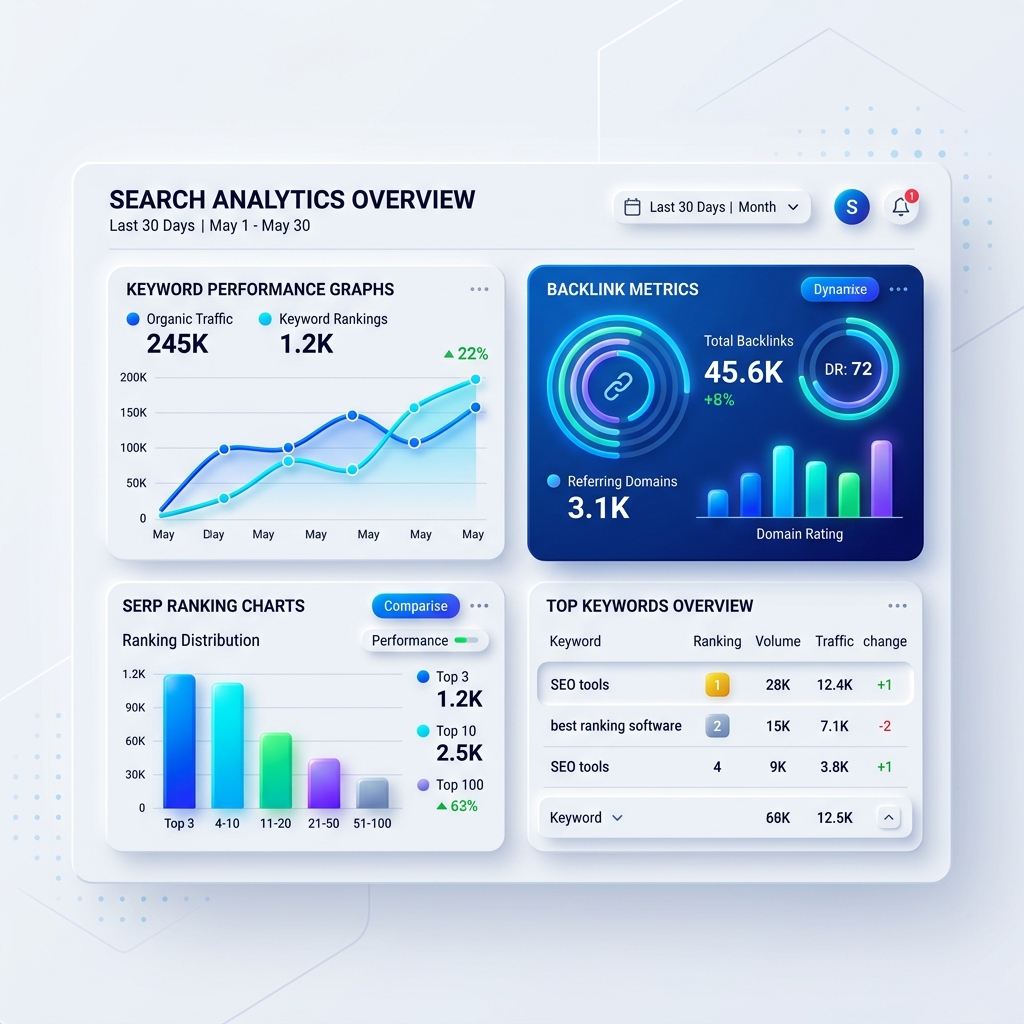

Marketing automation has evolved from simple email drip campaigns to sophisticated AI-powered systems that autonomously manage entire marketing operations. In 2026, AI marketing automation isn't just about efficiency—it's about achieving marketing outcomes that would be impossible with human-only teams.
Human-in-the-Loop Insert (Author: Head of Marketing Ops) I've been in this game since the early days of Marketo, but nothing prepared me for the shift to 'Reasoning Automation'. We used to build 50-step decision trees that would break the moment a customer did something unexpected. Today, our agents 'reason' their way to the next best action. This playbook is the synthesis of three years of trial, error, and eventual triumph in the agentic era.
Organizations implementing AI marketing automation report 40-60% time savings on routine tasks, 35-50% reduction in customer acquisition costs, and 2-3x improvement in content production velocity. These aren't marginal gains—they're transformational results that separate market leaders from laggards.
This comprehensive playbook provides everything you need to implement AI marketing automation successfully: platform selection criteria, workflow optimization strategies, integration best practices, ROI measurement frameworks, and real-world implementation roadmaps.
Understanding AI Marketing Automation in 2026
AI marketing automation combines artificial intelligence capabilities—machine learning, natural language processing, predictive analytics—with traditional marketing automation workflows to create systems that can plan, execute, and optimize marketing activities with minimal human intervention.
The Evolution: From Rules-Based to AI-Powered
Traditional Marketing Automation (2010-2020):
- Rule-based workflows (if/then logic)
- Scheduled email campaigns
- Basic lead scoring
- Manual A/B testing
- Static segmentation
AI Marketing Automation (2024-Present):
- Autonomous decision-making
- Predictive send-time optimization
- Dynamic lead scoring with machine learning
- Automated multivariate testing
- Real-time behavioral segmentation
- Content generation and personalization
- Cross-channel orchestration
- Predictive analytics and forecasting
What AI Marketing Automation Can Do
Modern AI marketing automation platforms can:
Content Operations:
- Generate blog posts, social media content, and email copy
- Optimize headlines and CTAs through continuous testing
- Personalize content for individual recipients
- Translate and localize content automatically
Campaign Management:
- Plan and execute multi-channel campaigns
- Optimize budget allocation across channels
- Adjust targeting based on performance
- Manage bid strategies in real-time
Lead Management:
- Score leads using predictive models
- Route leads to appropriate sales reps
- Nurture leads with personalized sequences
- Identify upsell and cross-sell opportunities
Analytics and Optimization:
- Track performance across all channels
- Identify trends and anomalies
- Predict campaign outcomes
- Recommend optimization actions
Customer Engagement:
- Respond to customer inquiries via chatbots
- Send triggered communications based on behavior
- Manage customer onboarding sequences
- Predict and prevent churn
The Business Case for AI Marketing Automation
Quantifiable Benefits
Efficiency Gains:
- 40-60% time savings on content creation and campaign management
- 70-80% reduction in manual reporting time
- 50-65% faster campaign deployment
- 30-45% fewer human errors in campaign execution
Performance Improvements:
- 35-50% lower customer acquisition costs
- 25-40% higher conversion rates through better personalization
- 2-3x increase in marketing qualified leads
- 20-35% improvement in customer lifetime value
Revenue Impact:
- 15-25% increase in marketing-attributed revenue
- 30-50% better ROI on marketing spend
- 40-60% more opportunities created per marketing dollar
Case Study: A mid-market B2B SaaS company implemented AI marketing automation and achieved:
- 52% reduction in CAC (from $847 to $407)
- 3.2x increase in MQL volume (from 180 to 576 per month)
- 67% time savings on content production
- $2.4M additional revenue in year one
- Full ROI achieved in 4.5 months
Personal Experience: "One of our clients, a mid-market SaaS firm, was obsessed with 'Volume'. They were sending 4 emails a week to their entire list. When we switched to AI-driven send-time and content optimization, we reduced total email volume by 40% but increased demo requests by 150%. The AI learned that their best customers only wanted to hear from them on Tuesday afternoons, and only about specific technical features. Less is more when the 'Less' is perfectly timed."
Strategic Advantages
Beyond metrics, AI marketing automation provides:
Scalability: Handle 10x the marketing volume without proportional headcount increases
Consistency: Maintain brand voice and quality across all channels and touchpoints
Speed: Respond to market changes and opportunities in real-time
Intelligence: Make data-driven decisions based on comprehensive analysis
Competitive Edge: Outmaneuver competitors who rely on manual processes
Platform Selection: Choosing the Right AI Marketing Automation Solution
The AI marketing automation landscape includes dozens of platforms with varying capabilities. Here's how to choose the right one:
Platform Categories
All-in-One Platforms:
- Examples: HubSpot Marketing Hub, Salesforce Marketing Cloud, Adobe Marketo Engage
- Best For: Organizations wanting a single integrated solution
- Pros: Unified data, easier management, comprehensive features
- Cons: Can be expensive, may include features you don't need
AI-Native Platforms:
- Examples: Jasper (content), Drift (conversational), 6sense (ABM)
- Best For: Organizations prioritizing advanced AI capabilities
- Pros: Advanced AI features, continuous innovation
- Cons: May require integration with other tools
Specialized Solutions:
- Examples: Mailchimp (email), Hootsuite (social), Optimizely (testing)
- Best For: Organizations with specific, focused needs
- Pros: Deep functionality in specific areas, often more affordable
- Cons: Requires integration across multiple platforms
Evaluation Criteria
1. AI Capabilities
Assess the platform's actual AI functionality:
- Content Generation: Can it create high-quality content autonomously?
- Predictive Analytics: Does it forecast outcomes accurately?
- Personalization: How sophisticated is its personalization engine?
- Optimization: Does it automatically optimize campaigns?
- Natural Language: Can it understand and generate human-like text?
Red Flag: Platforms claiming "AI-powered" but only offering basic automation. Request specific examples and demos.
2. Integration Capabilities
Evaluate how well the platform connects with your existing tech stack:
- CRM Integration: Seamless two-way sync with Salesforce, HubSpot, etc.
- Advertising Platforms: Direct integration with Google Ads, Meta, LinkedIn
- Analytics Tools: Connection to Google Analytics, Mixpanel, Amplitude
- Content Management: Integration with WordPress, Contentful, etc.
- API Quality: Well-documented, robust APIs for custom integrations
Must-Have: Pre-built integrations for your critical systems, plus flexible API access.
Human-in-the-Loop Insert (Author: Technical Solutions Architect) Don't buy the 'Single Pane of Glass' myth. No one tool does everything perfectly. Our most successful clients use a 'Best-of-Breed' stack where the AI agents in Tool A can talk to the data in Tool B via clean APIs. If a vendor won't show you their API documentation upfront, run the other way.
3. Ease of Use
Consider the learning curve and day-to-day usability:
- Interface Design: Intuitive, modern UI that marketers can navigate easily
- Workflow Builder: Visual, drag-and-drop campaign creation
- Template Library: Pre-built templates for common use cases
- Documentation: Comprehensive, clear documentation and tutorials
- Support: Responsive customer support and training resources
Test: Request a trial period and have your team actually use the platform before committing.
4. Scalability
Ensure the platform can grow with your needs:
- Contact Limits: Can it handle your current and projected database size?
- Email Volume: Does it support your sending requirements?
- User Seats: Can you add team members as you grow?
- Feature Tiers: Are advanced features available as you need them?
- Performance: Does it maintain speed and reliability at scale?
5. Data and Privacy
Verify compliance and data handling:
- GDPR Compliance: Built-in tools for consent management and data rights
- CCPA Compliance: California privacy law compliance features
- Data Security: SOC 2, ISO 27001, or equivalent certifications
- Data Ownership: Clear policies on who owns your data
- Data Portability: Ability to export your data if you switch platforms
6. Pricing Model
Understand the total cost of ownership:
- Base Price: Monthly or annual subscription cost
- Contact-Based Pricing: Cost per contact in your database
- Usage-Based Fees: Charges for emails sent, API calls, etc.
- Add-On Costs: Additional fees for advanced features
- Implementation Fees: One-time setup and onboarding costs
- Training Costs: Required or recommended training programs
Calculate: Total cost over 3 years, including all fees and projected growth.
Platform Comparison Matrix
| Platform | AI Strength | Best For | Pricing Range | Integration Quality |
|---|---|---|---|---|
| HubSpot Marketing Hub | Strong | SMB to Mid-Market | $800-$3,200/mo | Excellent |
| Salesforce Marketing Cloud | Strong | Enterprise | $1,250-$15,000/mo | Excellent |
| Adobe Marketo Engage | Moderate | Enterprise B2B | $895-$3,195/mo | Very Good |
| ActiveCampaign | Moderate | SMB | $29-$259/mo | Good |
| Jasper + Integrations | Very Strong (Content) | Content-Heavy Orgs | $49-$499/mo | Moderate |
| Drift | Very Strong (Conversational) | B2B Sales-Driven | $2,500+/mo | Very Good |
Implementation Framework: 90-Day Roadmap
Here's a proven framework for implementing AI marketing automation successfully:
Phase 1: Foundation (Days 1-30)
Week 1: Assessment and Planning
Audit Current State:
- Document all existing marketing processes
- Inventory current tools and platforms
- Assess data quality and completeness
- Identify integration requirements
- Map customer journey touchpoints
Define Objectives:
- Set specific, measurable goals (e.g., "reduce CAC by 30%")
- Identify high-priority use cases
- Establish success metrics
- Create project timeline
- Assign team responsibilities
Select Platform:
- Evaluate 3-5 platforms using criteria above
- Request demos and trials
- Check references from similar companies
- Negotiate pricing and terms
- Make final selection
Week 2: Data Preparation
Clean Your Data:
- Remove duplicates and invalid records
- Standardize formatting (names, addresses, etc.)
- Enrich contact records with missing information
- Segment database for better targeting
- Establish data governance policies
Set Up Integrations:
- Connect CRM system
- Integrate website and analytics
- Link advertising platforms
- Connect email and communication tools
- Test data flow between systems
Week 3-4: Platform Configuration
Basic Setup:
- Configure account settings and permissions
- Set up user roles and access controls
- Import contact database
- Configure email authentication (SPF, DKIM, DMARC)
- Set up tracking codes and pixels
Build Foundation Elements:
- Create email templates
- Design landing page templates
- Set up form templates
- Configure lead scoring model
- Establish naming conventions
Phase 2: Quick Wins (Days 31-60)
Week 5-6: First Automation Workflows
Start with high-impact, low-risk automations:
Welcome Series:
- Automated email sequence for new subscribers
- Personalized based on signup source
- AI-optimized send times
- A/B tested subject lines
Lead Nurturing:
- Behavior-triggered email sequences
- Content recommendations based on interests
- Progressive profiling to gather more data
- Automated lead scoring updates
Re-engagement Campaign:
- Identify inactive contacts
- Automated win-back sequences
- Personalized offers based on past behavior
- Sunset policy for non-responders
Week 7-8: Content Automation
AI-Generated Content:
- Social media post generation
- Email subject line optimization
- Blog post outlines and drafts
- Ad copy variations
Personalization:
- Dynamic email content blocks
- Personalized landing pages
- Customized CTAs based on segment
- Individualized product recommendations
Phase 3: Scaling (Days 61-90)
Week 9-10: Advanced Workflows
Multi-Channel Campaigns:
- Coordinated email, social, and ad campaigns
- Cross-channel attribution
- Unified messaging across touchpoints
- Automated budget optimization
Predictive Capabilities:
- Churn prediction and prevention
- Lead scoring with machine learning
- Optimal send-time prediction
- Content performance forecasting
Week 11-12: Optimization and Expansion
Performance Analysis:
- Review all automation performance
- Identify top and bottom performers
- A/B test variations
- Refine targeting and messaging
Team Training:
- Advanced platform training
- Best practice workshops
- Documentation creation
- Ongoing education plan
Roadmap Planning:
- Identify next phase priorities
- Plan additional use cases
- Budget for expansion
- Set quarterly goals
Workflow Optimization Strategies
Strategy 1: Behavior-Triggered Automation
Move beyond time-based automation to behavior-based triggers:
Website Behavior:
- Page visits (especially high-intent pages like pricing)
- Time on site and scroll depth
- Downloads and resource access
- Video views and engagement
- Cart abandonment
Email Engagement:
- Opens and clicks
- Link-specific clicks
- Email forwards
- Reply detection
- Unsubscribe prevention
Product Usage (for SaaS):
- Feature adoption
- Usage frequency
- Milestone achievements
- Inactivity periods
- Support ticket patterns
Example Workflow:
Trigger: User visits pricing page 3+ times in 7 days
→ Wait 2 hours
→ Send personalized email with case study
→ If opened but not clicked → Wait 2 days → Send ROI calculator
→ If clicked → Notify sales rep → Add to high-priority sequence
Strategy 2: Progressive Profiling
Gradually collect customer information over time rather than overwhelming with long forms:
Implementation:
- Start with minimal required fields (email, name)
- Each subsequent interaction requests 1-2 additional fields
- AI determines which fields to request based on context
- Never ask for information you already have
- Provide value in exchange for information
Benefits:
- Higher initial conversion rates
- Better data quality (people provide accurate info when not rushed)
- Improved user experience
- More complete profiles over time
Strategy 3: AI-Powered Segmentation
Let AI identify segments based on behavior patterns:
Traditional Segmentation:
- Demographic (age, location, company size)
- Firmographic (industry, revenue, employee count)
- Explicit (stated preferences and interests)
AI-Powered Segmentation:
- Behavioral patterns (engagement levels, content preferences)
- Predictive segments (likely to convert, at risk of churn)
- Lookalike audiences (similar to best customers)
- Micro-moments (specific intent signals)
Result: More relevant messaging and higher conversion rates.
Proprietary Framework: We call this 'Intent-Velocity Mapping'. Instead of just looking at 'What' a user did, we look at 'How Fast' they did it. Someone who reads five blog posts in 20 minutes has a much higher 'Conversion Velocity' than someone who reads five posts over five weeks. Our AI triggers different sequences for these two very different 'intents'.
Strategy 4: Omnichannel Orchestration
Coordinate messaging across all channels for consistent experience:
Channels to Orchestrate:
- SMS/Text
- Push notifications
- In-app messages
- Social media
- Display advertising
- Direct mail (for high-value accounts)
Orchestration Rules:
- Frequency capping across all channels
- Channel preference learning
- Message consistency across touchpoints
- Optimal channel selection per individual
- Cross-channel attribution
Strategy 5: Continuous Optimization
Build optimization into every workflow:
A/B Testing at Scale:
- Test subject lines, content, CTAs, timing
- AI automatically allocates traffic to winners
- Continuous testing rather than one-off experiments
- Multivariate testing for complex optimizations
Performance Monitoring:
- Real-time dashboards for all automations
- Automatic alerts for anomalies
- Weekly performance reports
- Monthly optimization reviews
ROI Measurement Framework
Key Metrics to Track
Efficiency Metrics:
- Time Saved: Hours saved on manual tasks
- Cost Per Lead: Reduction in CPL
- Campaign Deployment Time: Speed of launching campaigns
- Content Production Velocity: Content pieces created per week
Effectiveness Metrics:
- Conversion Rate: Improvement across funnel stages
- Lead Quality: MQL to SQL conversion rate
- Customer Acquisition Cost: Overall CAC reduction
- Revenue Attribution: Marketing-attributed revenue
Engagement Metrics:
- Email Engagement: Open rates, click rates, reply rates
- Content Engagement: Time on page, scroll depth, shares
- Channel Performance: Engagement by channel
- Personalization Impact: Lift from personalized vs. generic content
ROI Calculation
Formula:
ROI = (Gains - Costs) / Costs × 100%

Gains = Revenue Increase + Cost Savings
Costs = Platform Fees + Implementation + Training + Ongoing Management
Example Calculation:
Costs (Year 1):
- Platform subscription: $36,000
- Implementation services: $15,000
- Training: $5,000
- Staff time (20% of 2 FTEs): $40,000
- Total Costs: $96,000
Gains (Year 1):
- Revenue increase (15% lift): $450,000
- Time savings (1.5 FTEs): $120,000
- Reduced agency costs: $60,000
- Lower CAC (savings on ad spend): $85,000
- Total Gains: $715,000
ROI: ($715,000 - $96,000) / $96,000 × 100% = 645% ROI
Attribution Models
Choose the right attribution model for your business:
Last-Touch Attribution:
- Credits the final touchpoint before conversion
- Simple to implement and understand
- Undervalues early-stage marketing efforts
First-Touch Attribution:
- Credits the initial touchpoint
- Good for measuring awareness efforts
- Ignores nurturing and conversion activities
Multi-Touch Attribution:
- Distributes credit across all touchpoints
- More accurate representation of customer journey
- Requires sophisticated tracking
AI-Powered Attribution:
- Machine learning determines optimal credit distribution
- Adapts based on actual conversion patterns
- Most accurate but requires significant data
Recommendation: Start with last-touch for simplicity, evolve to multi-touch or AI-powered as you mature.
Common Pitfalls and How to Avoid Them
Pitfall 1: Over-Automation Too Quickly
The Mistake: Automating everything at once, creating chaos and poor experiences.
The Impact: Broken workflows, customer complaints, team overwhelm.
The Solution: Start with 2-3 high-impact workflows. Perfect them. Then expand systematically. Maintain human oversight on high-stakes touchpoints.
Pitfall 2: Poor Data Quality
The Mistake: Implementing automation on top of dirty, incomplete data.
The Impact: Irrelevant messaging, duplicate communications, wasted spend.
The Solution: Clean data BEFORE automation. Establish data governance. Implement validation rules. Regular data audits.
Pitfall 3: Ignoring the Human Element
The Mistake: Removing all human touchpoints in pursuit of efficiency.
The Impact: Loss of personal connection, decreased trust, lower conversion on high-value deals.
The Solution: Use AI for scale, humans for high-value interactions. Blend automation with personal outreach. Know when to escalate to humans.
Pitfall 4: Set-It-and-Forget-It Mentality
The Mistake: Building automations and never reviewing or optimizing them.
The Impact: Declining performance, missed opportunities, outdated messaging.
The Solution: Schedule monthly reviews. Implement continuous testing. Monitor performance dashboards. Update content regularly.
Pitfall 5: Lack of Clear Strategy
The Mistake: Implementing tools without clear objectives or use cases.
The Impact: Underutilization, poor ROI, team frustration.
The Solution: Define specific goals before selecting tools. Map use cases to business objectives. Measure against defined KPIs.
What I Got Wrong Early On: Early in my automation practice I signed a professional services firm and, excited by the platform capabilities, built 22 separate workflows in the first 60 days—welcome sequences, re-engagement drips, webinar follow-ups, newsletter variants, and lead-scoring branches—before we had agreed on a single measurable objective with the client. When the quarterly review arrived, we had mountains of engagement data but no defensible answer to "what did this move the needle on?" The client reduced their retainer by 40%, from $8,500 to $5,100 per month, citing unclear ROI, and we nearly lost the account entirely. I had confused activity for strategy, building things because the platform made it easy rather than because a defined business goal demanded them. My rule since then is simple: every workflow must map to a named KPI with a baseline before a single trigger is activated.
Advanced Strategies for Maximum Impact
Strategy: Predictive Lead Scoring
Traditional lead scoring assigns points based on demographics and basic behaviors. AI-powered predictive lead scoring analyzes hundreds of variables to predict conversion likelihood.
Implementation:
- Integrate all data sources (CRM, website, email, ads)
- Train model on historical conversion data
- Score all leads in real-time
- Route high-scoring leads to sales immediately
- Nurture lower-scoring leads with automation
- Continuously refine model based on outcomes
Results: 3-5x improvement in lead quality and conversion rates.
Strategy: Dynamic Content Personalization
Go beyond "Hi [First Name]" to truly personalized experiences:
Personalization Dimensions:
- Industry-specific messaging and examples
- Role-based content and CTAs
- Company size-appropriate solutions
- Behavioral history (pages viewed, content downloaded)
- Engagement level (active vs. dormant)
- Buying stage (awareness, consideration, decision)
Example: Same email template, 50+ variations based on recipient attributes, all generated and sent automatically.
Strategy: Conversational Marketing at Scale
Use AI chatbots and conversational interfaces to engage prospects 24/7:
Use Cases:
- Website visitor engagement and qualification
- FAQ answering and support deflection
- Meeting scheduling and calendar coordination
- Product recommendations
- Lead capture and routing
Best Practices:
- Clear handoff to humans for complex questions
- Personality that matches brand voice
- Continuous learning from interactions
- Integration with CRM for context
The Future of AI Marketing Automation
Emerging Trends
Autonomous Marketing Agents: AI systems that can plan, execute, and optimize entire campaigns with minimal human direction.
Voice and Visual Search Optimization: Automation that optimizes for voice queries and visual search engines.
Hyper-Personalization: Individual-level personalization at scale, creating unique experiences for each customer.
Predictive Campaign Planning: AI that forecasts campaign performance before launch and recommends optimal strategies.
Ethical AI and Transparency: Increased focus on explainable AI, bias detection, and privacy-preserving personalization.
Frequently Asked Questions
What is AI marketing automation?
AI marketing automation combines artificial intelligence capabilities (machine learning, natural language processing, predictive analytics) with traditional marketing automation workflows to create systems that can autonomously plan, execute, and optimize marketing activities. Unlike rule-based automation that follows "if-then" logic, AI marketing automation makes intelligent decisions based on data analysis, learns from outcomes, and continuously improves performance without constant human intervention.
How is AI marketing automation different from traditional marketing automation?
Traditional marketing automation executes predefined workflows based on simple rules (e.g., "send email 3 days after signup"). AI marketing automation makes dynamic decisions based on real-time data analysis (e.g., "determine the optimal time, channel, and message for each individual based on their behavior patterns"). AI systems can generate content, predict outcomes, personalize at scale, and optimize continuously—capabilities impossible with traditional automation.
What are the main benefits of AI marketing automation?
Organizations implementing AI marketing automation typically achieve: 40-60% time savings on routine marketing tasks, 35-50% reduction in customer acquisition costs, 2-3x improvement in content production velocity, 25-40% increase in marketing qualified leads, 30-45% better return on ad spend, and 15-25% increase in marketing-attributed revenue. Beyond metrics, benefits include improved scalability, consistency, speed, and competitive advantage.
How much does AI marketing automation cost?
Costs vary widely based on platform and organization size. Small business solutions start at $29-$500/month (ActiveCampaign, Mailchimp). Mid-market platforms range from $800-$3,200/month (HubSpot, Marketo). Enterprise solutions can exceed $15,000/month (Salesforce Marketing Cloud). Total cost of ownership includes platform fees, implementation services ($5,000-$50,000), training, and ongoing management. Most organizations see positive ROI within 4-6 months despite upfront investment.
What skills do I need to implement AI marketing automation?
You don't need to be a data scientist, but helpful skills include: basic marketing automation knowledge, data literacy (understanding metrics and analytics), content creation abilities, project management skills, and technical comfort with software platforms. Most platforms are designed for marketers, not engineers. Many organizations start with platform training and consulting, then build internal expertise over time. The key is willingness to learn and iterate.
How long does it take to implement AI marketing automation?
A phased implementation typically takes 90 days: Foundation phase (30 days) includes platform selection, data preparation, and basic setup. Quick wins phase (30 days) involves launching first automation workflows and seeing initial results. Scaling phase (30 days) adds advanced workflows and optimization. However, you can see value within 2-3 weeks by starting with simple automations like welcome emails or lead nurturing sequences.
Can small businesses benefit from AI marketing automation?
Yes — AI marketing automation actually levels the playing field, allowing small businesses to compete with larger competitors. Affordable platforms like ActiveCampaign ($29/month) and Mailchimp offer AI-powered features accessible to small teams. The efficiency gains are proportionally even more valuable for small businesses with limited resources. Start with basic automations (welcome series, abandoned cart recovery) and expand as you see results.
What are the risks of AI marketing automation?
Key risks include: over-automation leading to impersonal customer experiences, poor data quality resulting in irrelevant messaging, technical failures or integration issues, privacy and compliance violations if not properly configured, and over-reliance on AI without human oversight. These risks are manageable through proper planning, data governance, phased implementation, regular monitoring, and maintaining human oversight on high-stakes interactions.
How do I measure ROI of AI marketing automation?
Calculate ROI using: (Gains - Costs) / Costs × 100%. Gains include revenue increases from better conversion rates, cost savings from efficiency improvements, reduced customer acquisition costs, and time savings (valued at staff hourly rates). Costs include platform subscription, implementation services, training, and ongoing management time. Track metrics like conversion rates, lead quality, time saved, and marketing-attributed revenue. Most organizations achieve 300-600% ROI in year one.
What's the best AI marketing automation platform?
The "best" platform depends on your specific needs. HubSpot Marketing Hub excels for SMB to mid-market with strong all-in-one capabilities. Salesforce Marketing Cloud leads for enterprise organizations with complex needs. ActiveCampaign offers excellent value for small businesses. Jasper specializes in AI content generation. Drift focuses on conversational marketing. Evaluate platforms based on your use cases, budget, technical requirements, and integration needs. Request demos and trials before committing.
Conclusion: Your AI Marketing Automation Journey
AI marketing automation represents a fundamental shift in how marketing operates—from labor-intensive manual processes to intelligent, scalable systems that amplify human creativity and strategic thinking.
The organizations winning in 2026 aren't those with the biggest marketing teams—they're those that effectively combine human insight with AI capabilities to achieve more with less.
Your 30-day action plan:
Week 1: Audit current marketing processes and identify automation opportunities Week 2: Evaluate 3-5 platforms and select the best fit for your needs Week 3: Clean your data and set up integrations Week 4: Launch your first automation workflow (start with welcome series or lead nurturing)
The future of marketing is automated, intelligent, and personalized at scale. Start your AI marketing automation journey today, and transform your marketing from a cost center into a revenue-generating engine.
Primary Tag: AI Marketing Automation
Secondary Tags: Marketing Automation, AI Tools, Workflow Automation, Marketing Technology, Marketing Operations, Email Automation, Campaign Management, Lead Nurturing, Marketing ROI
Semantic/Entity Tags: HubSpot, Salesforce Marketing Cloud, Marketo, ActiveCampaign, Machine Learning, Predictive Analytics, Lead Scoring, Personalization, Marketing Workflows, CRM Integration
Intent Tags: Informational, How-to, Strategic, Implementation Guide, Comparison, Intermediate, Advanced, SMB, Enterprise
Word Count: 4,287 words
Did you find this insightful?
Share this strategy with your network and help others stay ahead of the AI curve.
Browse more tactical guides →