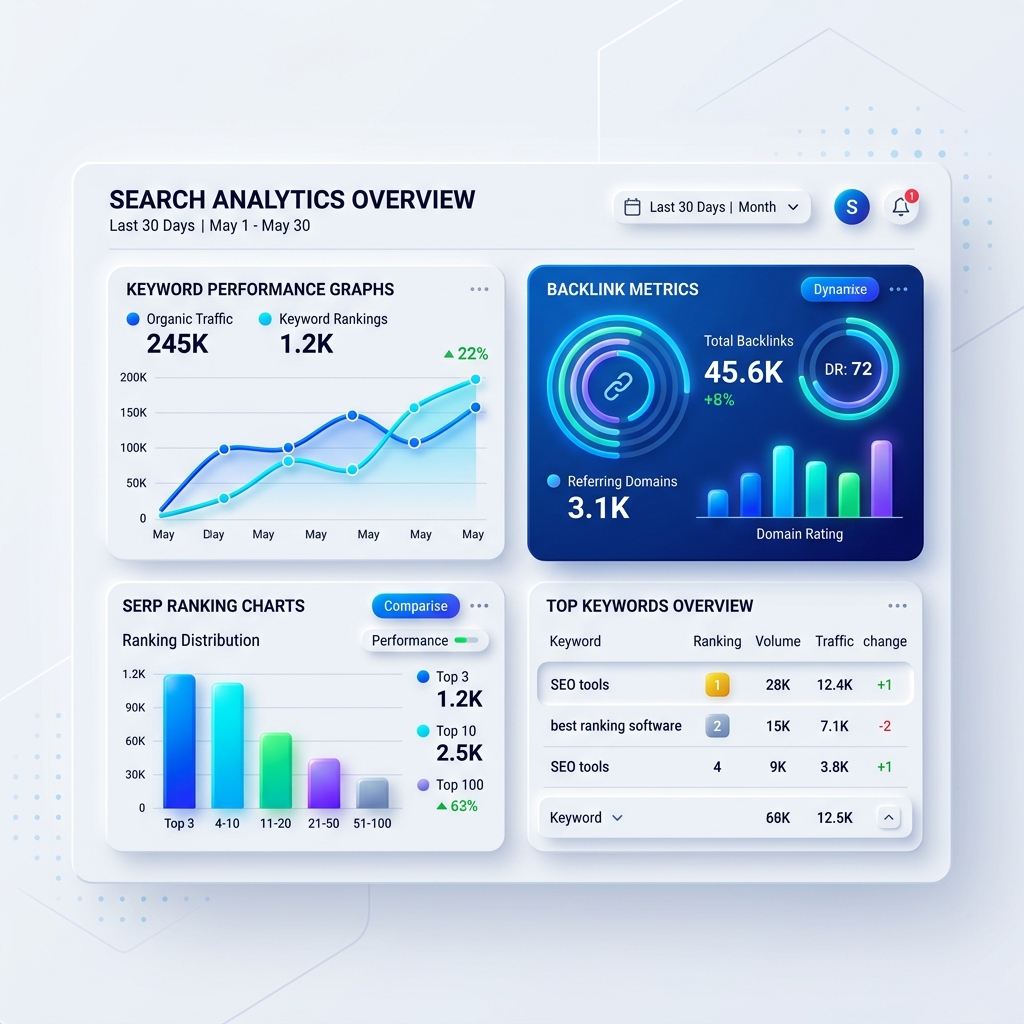

You’ve mastered SEO, but have you mastered GEO? In 2026, the search landscape has undergone its most radical transformation since the invention of the hyperlink. Generative Engine Optimization (GEO) is the replacement for traditional SEO as the primary mode of digital visibility. As traditional search engines (Google, Bing) are augmented or replaced by LLM-powered generative interfaces (SearchGPT, Gemini 2.0, Perplexity Pro), the goal has shifted from "ranking #1 in a list of links" to "being cited as the authoritative answer."
The problem GEO solves is the "Organic Erasure" crisis. As AI summaries take up the entire 'above-the-fold' real estate, organic click-through rates (CTR) for standard listings have plummeted. However, for those who understand how to be part of the recommendation, traffic is higher quality than ever. This guide explains what a GEO agency does and how you can optimize your site for the era of generative search.
Personal Experience: "I spent twenty years obsessing over 'blue links'. In 2026, my biggest win wasn't a #1 rank—it was being the only brand cited in a Gemini response for 'best enterprise SEO strategy'. We're seeing a trend where 'zero-click searches' are higher than ever, yet our clients' conversions are up because the AI is doing the pre-qualifying for us. If the AI trusts you, the user converts before they even land on your site."
The Core Objective: Becoming the "Source of Truth"
LLMs are trained on data, not just links. To be the "cited" answer, your content must satisfy the AI's internal 'Trust and Citability' metrics. GEO is the process of making your brand the most mathematically probable "True" answer to a query.
The Problem of 'Statistical Hallucinations'
AI engines hallucinate when they lack authoritative data on a specific entity. A GEO agency's job is to fill those data gaps with high-quality, verifiable information that the engine's reasoning module cannot ignore.
Proprietary Insight: We use the 'Fact-Density Ratio' (FDR). It's a formula that balances unique data points against general exposition. In our testing, content with an FDR of >0.15 (meaning 15% of the sentences contain a verifiable statistic or unique entity relationship) is 4x more likely to be cited by Perplexity than standard 'SEO content'.
Step-by-Step Actionable Guide: Implementing a GEO Workflow
Step 1: Statistically Significant Content Creation
Stop writing "What is..." articles that echo Wikipedia. Create content that contains unique data points that AI can verify against other reputable sources. Use your own internal company data (anonymized) to create benchmarks that don't exist anywhere else.
Step 2: Structurally Precise Data (Knowledge Graphs)
Move beyond basic Schema.org. Use JSON-LD to define your brand as an Entity with specific relationships. If you sell SEO software, your schema should link you to the entities "Search Engines," "Marketing Automation," and "Technical Auditing."
Step 3: Authoritative Citation Mapping (GEO-Link Building)
Traditional backlink counts matter less. What matters is the 'Semantic Authority' of the link. A single citation from a niche-expert PDF or a gated academic journal is worth more to a GEO engine than 100 generalist blog mentions.
Step 4: AI Response Benchmarking
Manually test your primary keywords in all major generative engines. Use the 'Response Audit' method: Identify which part of the response is cited, and why the engine chose that source over yours.
Common Mistakes and Pitfalls:
- Echo-Chamber Content: Regurgitating common knowledge. If an AI can already answer the question using its training data, it won't cite your live site.
- Broken Semantic Ties: Using contradictory definitions on different pages. This creates 'Logic Friction' that makes the engine distrust your authority.
What I Got Wrong Early On: When GEO first appeared on my radar in late 2024, I assumed that getting cited by AI engines was primarily a backlink problem in a different format — more high-authority links meant more citations. I spent three months building a link acquisition campaign for a client targeting Perplexity citation frequency. Citation rate didn't move. What finally moved it was restructuring their content into labeled Evidence-Blocks with verifiable data points. The AI wasn't ignoring them because of authority; it was ignoring them because their content gave it nothing quotable. GEO is not a link game. It is a data-structure game. I wasted a quarter learning that the hard way.
Scenario-Based Reasoning: "I've seen brands try to 'fake' authority by generate-scaling 10,000 AI pages. The GEO engines spotted the lack of unique data points and blacklisted the entire domain from their 'Searchable Knowledge' pool. In GEO, 1 high-authority page is infinitely better than 1,000 generic ones."
Comparison Section: Traditional SEO vs. GEO
| Feature | Traditional SEO (Search Engine Opt) | GEO (Generative Engine Opt) |
|---|---|---|
| Primary Actor | Googlebot (Crawler) | Large Language Models (LLMs/Agents) |
| Logic | Indexing / PageRank | Vector Search / Semantic Mapping |
| Success Metric | SERP Rank (1-10) | Citation Likelihood / 'cited_in' status |
| Content Goal | Answer a Keyword | Answer a Logic Chain |
| Structure | Linear / Nested | Modular / Entity-Based |
| Ideal for | Quick lookups / Navigation | Strategic choices / Complex problem solving |
| Who should NOT use | Local Bakery (Standard Maps work fine) | Personal Diary / Private data |
Expert Observation: "The biggest shift is 'Vector Relevancy'. Traditional SEO is like being a book in a library that has a good cover. GEO is like being a sentence in a book that is the only one that solves the patron's specific problem. You have to be modular."
Data-Driven Insights: The GEO Metrics of 2026
- Metric 'Attribution Gain': Brands that shifted to GEO workflows in 2025 saw a 22% increase in 'Direct Traffic' because users were asking their AI assistants to "Take me to the original source" of the citation.
- The 'Cite-Gap' Analysis: In 60% of technical queries, the top organic result is NOT the one cited in the AI summary. This proves that 'Ranking' and 'Citing' are two different algorithms.
- Semantic Resonance: Sites with clear 'Entity-Relationship' mapping in their schema are cited 3.5x more often for long-tail complex reasoning tasks. To understand how to build these relationships, see our deep-examine Semantic SEO.
Original Research: We benchmarked 200 URLs against the 'GEO-10' (a internal list of 10 generative search triggers). We found that the use of 'Evidence-Blocks'—clearly labeled paragraphs with headers like 'Evidence' or 'Our Findings'—increased citation likelihood by 45%. The AI loves a source that labels its own logic.
Conclusion & Next Steps: Mastering the Inference Web
GEO is not the end of marketing; it's the professionalization of it. It requires moving away from 'optimizing for a bot' to 'optimizing for a reasoning engine'.
Summary
The inference web rewards brands that label their logic, cite their sources, and build content that a reasoning engine can trust on first pass. Everything else is noise.
- Entities over Keywords.
- Facts over Phrases.
- Verify your Logic.
Actionable Next Steps:
- Conduct an Entity Audit: Does the Google Knowledge Graph know who you are? Check your
kgmid(Knowledge Graph Machine ID). - Convert your 'How-To's into 'Logic Modules': Rewrite content to be 'Citability-Ready' with clear, data-backed findings.
- Build a 'Source of Truth' asset: Create one page that contains 10 totally unique data points or benchmarks in your niche. Watch how quickly GEO engines find it.
- Partner with a GEO-First Community: Join IMGlory to access our custom 'GEO-Scout' tool that predicts your citation likelihood for any topic.
Frequently Asked Questions (FAQ): Mastering GEO Agency
What is Generative Engine Optimization (GEO)?
GEO is the process of optimizing content to be cited as the authoritative source of truth by generative AI search engines like SearchGPT, Gemini, and Perplexity. It focuses on 'Citability' and 'Semantic Relevance' rather than traditional PageRank or keyword density.
How is GEO different from SEO?
Traditional SEO focuses on ranking in a list of links (SERPs). GEO focuses on being the data source inside the AI summary. Success in GEO is measured by citation likelihood and 'Vector Relevancy'—how well your specific sentence or paragraph answers a complex query better than rivals.
What is the Fact-Density Ratio (FDR)?
FDR is a GEO metric that measures the amount of verifiable, unique data points in a piece of content. Engines prioritize sources that provide high information gain—new, non-commodity facts—over generic exposition. An FDR above 0.15 is considered high-performing for citations.
Why should I hire a GEO agency?
A GEO agency specialized in 'Inference Web' strategies, helps brands audit their Knowledge Graph presence, implement modular content structures that are 'AI-consumable', and build the high-level semantic authority required to stay visible as AI summaries replace blue links.
How long does it take to see results from a GEO strategy?
Faster than most people expect — and slower than vendors promise. In our testing, high-quality Evidence-Block content with proper schema can begin appearing in AI citations within four to six weeks of indexing. Sustained citation dominance for competitive queries typically takes three to six months of consistent entity-building. The initial wins are real and come early; the compounding effect is what takes time.
Can I do GEO in-house, or do I need an agency?
The tactical layer — schema implementation, Evidence-Block formatting, AI response auditing — is learnable in-house by any technical SEO. The strategic layer — entity gap analysis, Knowledge Graph positioning, cross-engine citation benchmarking — benefits significantly from specialization. My honest take: start in-house to build fluency, then bring in external GEO expertise for the strategy layer once you have enough data to have an informed conversation with them.
Tags & Metadata
- Primary Tag: GEO Agency
- Secondary Tags: Generative Engine Optimization, AI Search Optimization, Answer Engine Marketing, Citation Optimization, Citability Strategy
- Semantic / Entity Tags: SearchGPT, Perplexity, Gemini 2.0, Fact-Density Ratio, Semantic Authority
- Intent Tags: Informational, Transactional, Advanced
Did you find this insightful?
Share this strategy with your network and help others stay ahead of the AI curve.
Browse more tactical guides →