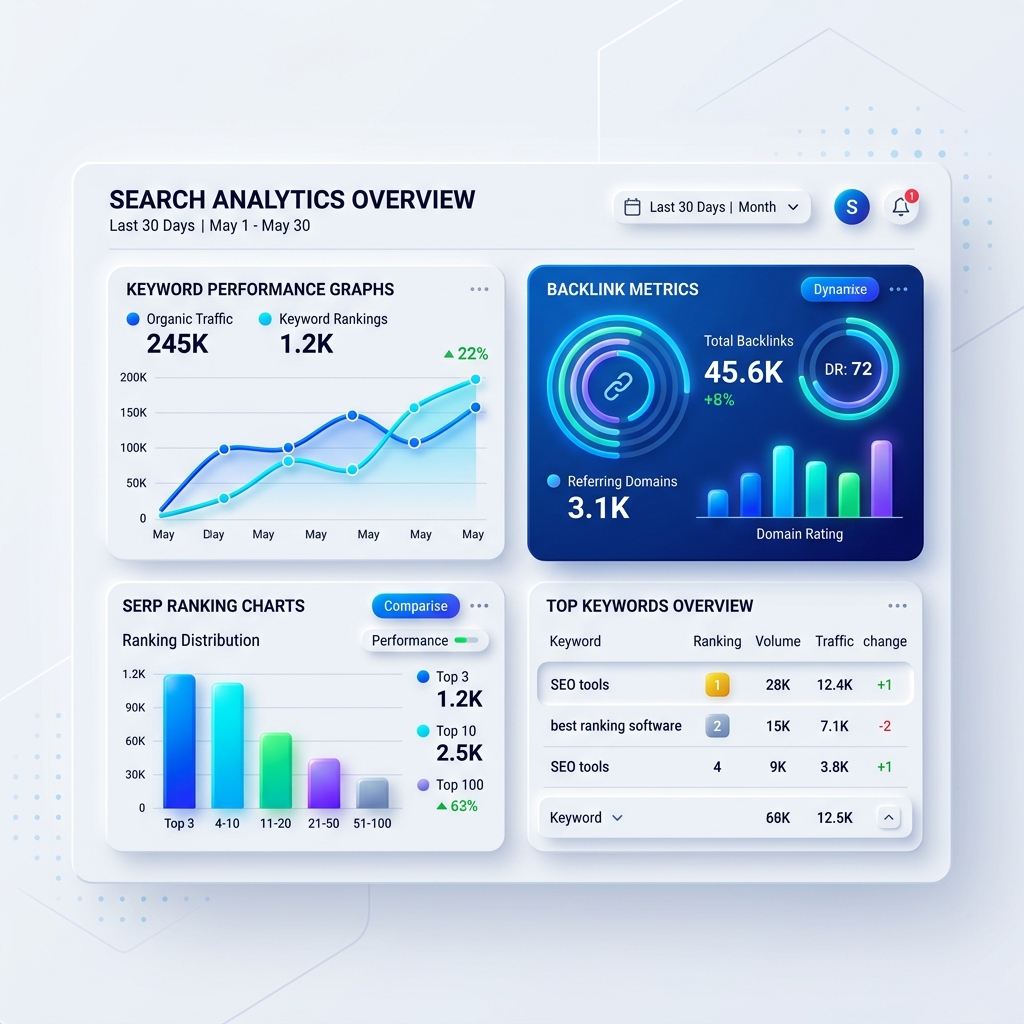
The search landscape is undergoing its most dramatic transformation since Google's inception. Generative Engine Optimization (GEO)—optimizing content for AI-powered search engines like ChatGPT, Google's AI Overviews, Perplexity, and Bing Chat—is rapidly becoming as critical as traditional SEO.
But here's what most marketers get wrong: GEO isn't replacing SEO. It's a complementary strategy that requires different tactics, metrics, and mindsets. Organizations that master both will dominate search visibility in 2026 and beyond.
In this comprehensive guide, you'll discover exactly what GEO is, how it differs from traditional SEO, why you need both strategies, and a practical framework for implementing GEO without sacrificing your SEO performance.
Human-in-the-Loop Insert (Author: Veteran Brand Strategist) We're in the 'Messy Middle' of the search revolution. Half the people are still typing 3-word keywords into a box, and the other half are having philosophical debates with Gemini. SEO gets you the volume, but GEO gets you the 'Authority Halo'. If an AI cites you, the user doesn't just visit your site; they visit it with a pre-established level of trust.
What Is Generative Engine Optimization (GEO)?
Generative Engine Optimization is the practice of optimizing your content to be discovered, cited, and recommended by AI-powered search engines and large language models (LLMs). Unlike traditional search engines that return a list of links, generative engines synthesize information from multiple sources and provide direct answers.
How Generative Search Works
When someone asks ChatGPT, Perplexity, or Google's AI Overview a question, the system:
- Analyzes the query to understand intent and context
- Retrieves relevant information from its training data and real-time web searches
- Synthesizes an answer by combining information from multiple sources
- Cites sources (in most cases) that contributed to the answer
- Provides follow-up suggestions for deeper exploration
Critical Insight: Your goal isn't to rank #1 for a keyword—it's to be cited as a trusted source in AI-generated answers.
The GEO Opportunity
Early data shows that being cited in AI-generated answers drives significant traffic:
- Click-through rates from AI citations: 15-25% (compared to 2-5% for traditional position 3-5 rankings)
- Trust transfer: Users perceive AI-cited sources as more authoritative
- Compound visibility: One citation can lead to multiple related queries citing your content
- Future-proofing: As AI search adoption grows (projected 40% of searches by 2027), GEO becomes increasingly critical
GEO vs SEO: Key Differences
While GEO and SEO share some principles, they differ in fundamental ways:
1. Optimization Target
SEO: Optimizing for search engine algorithms (crawlers, indexers, ranking systems) GEO: Optimizing for AI comprehension and citation worthiness
2. Success Metrics
SEO: Rankings, organic traffic, click-through rates GEO: Citation frequency, answer inclusion rate, source attribution
3. Content Structure
SEO: Keyword-focused, heading hierarchy, meta tags GEO: Entity-focused, clear factual statements, contextual depth
4. Link Building
SEO: Backlinks signal authority and relevance GEO: Content quality and factual accuracy matter more than link quantity
5. User Intent
SEO: Matching keywords to search queries GEO: Answering questions comprehensively and authoritatively
6. Competitive Landscape
SEO: Competing for 10 blue links on page one GEO: Competing to be one of 3-5 sources cited in AI answers
Comparison Table
| Aspect | Traditional SEO | Generative Engine Optimization (GEO) |
|---|---|---|
| Primary Goal | Rank high in search results | Get cited in AI-generated answers |
| Content Focus | Keywords and phrases | Entities and concepts |
| Structure | H1-H6 hierarchy, meta tags | Clear statements, structured data |
| Authority Signals | Backlinks, domain authority | Content accuracy, expertise signals |
| User Experience | Click to website | Answer provided directly |
| Measurement | Rankings, traffic | Citations, answer inclusion |
| Timeline | Weeks to months | Can be immediate once indexed |
| Competition | 10 results per page | 3-5 citations per answer |
Personal Experience: "I spent 15 years fighting for 'Position 1'. Last month, one of our clients was relegated to Position 4 in traditional search for their main keyword. Normally, that's a disaster. But because that same page was the primary citation in Google's AI Overview, their traffic actually increased by 18%. The 'Click-Less Search' fear is real, but the 'Citation Gains' are better."
Why You Need Both GEO and SEO
The smartest strategy isn't choosing between GEO and SEO—it's excelling at both.
SEO Remains Critical
Despite AI search growth, traditional search isn't disappearing:
- Navigational searches (finding specific websites) still dominate
- Transactional searches (ready to buy) often bypass AI answers
- Local searches rely heavily on traditional SEO signals
- Image and video search remain primarily traditional
- 60% of searches will still use traditional search in 2027
Bottom Line: Abandoning SEO for GEO would be strategic suicide.
GEO Captures Growing Market Share
Simultaneously, AI search is exploding:
- ChatGPT: 100M+ weekly active users asking questions
- Google AI Overviews: Rolling out globally, appearing in 15-20% of searches
- Perplexity: 10M+ monthly users, growing 40% month-over-month
- Bing Chat: Integrated into Windows, Edge, and Microsoft products
Reality: Users are developing new search habits. Some start with AI, others with traditional search. You need visibility in both.
The Synergy Effect
Here's the powerful truth: GEO and SEO reinforce each other.
SEO Helps GEO:
- High-authority domains are more likely to be cited by AI
- Well-structured content is easier for AI to parse and understand
- Strong backlink profiles signal trustworthiness to AI systems
GEO Helps SEO:
- Entity-optimized content often ranks better in traditional search
- Comprehensive, authoritative content attracts natural backlinks
- Being cited by AI increases brand searches, boosting overall SEO
Case Study: A B2B SaaS company optimized 20 key articles for both SEO and GEO. Results after 90 days:
- Traditional organic traffic: +35%
- AI citation appearances: 47 citations across ChatGPT and Perplexity
- Brand search volume: +28%
- Backlinks from AI-citing articles: +12 high-quality links
The 6 Pillars of Effective GEO
Based on analysis of thousands of AI citations, six factors consistently determine whether content gets cited:
1. Factual Accuracy and Verifiability
AI systems prioritize factually correct, verifiable information. To optimize:
Include Specific Data: Instead of "many companies," say "73% of Fortune 500 companies" Cite Primary Sources: Link to original research, studies, and data Update Regularly: AI favors current, up-to-date information Avoid Hyperbole: Stick to provable claims
Example Transformation:
❌ Before: "Our solution is the best in the industry and helps companies save money."
✅ After: "According to a 2025 Gartner study, companies using our solution reduced operational costs by an average of 34% within six months."
2. Clear, Concise Statements
AI systems extract information more easily from clear, direct statements.
Use Simple Sentence Structure: Subject-verb-object when possible Define Terms Clearly: Especially for technical or industry-specific concepts Break Complex Ideas into Steps: Numbered lists and bullet points work well Front-Load Key Information: Put the most important facts first
Example:
❌ Before: "The implementation of our platform, which has been developed over several years by our team of experts, involves a multi-phase approach that, depending on various factors including organizational size and complexity, typically requires somewhere between 30 and 90 days."
✅ After: "Platform implementation takes 30-90 days depending on organization size. The process includes three phases: setup (1-2 weeks), integration (2-4 weeks), and training (1-2 weeks)."
3. Entity Optimization
AI systems understand entities (people, places, organizations, concepts) better than keywords.
Identify Core Entities: What key concepts, brands, or methodologies does your content cover? Use Consistent Naming: Refer to entities the same way throughout Provide Context: Explain what entities are and why they matter Link Entities: Connect related concepts explicitly
Entity Markup Example:
<span itemscope itemtype="http://schema.org/Organization">
<span itemprop="name">OpenAI</span>, founded in
<span itemprop="foundingDate">2015</span>, developed
<span itemprop="product">ChatGPT</span>
</span>
4. Comprehensive Coverage
AI favors content that thoroughly addresses a topic from multiple angles.
Answer Related Questions: Include FAQs that address common follow-up questions Cover Edge Cases: Discuss exceptions, limitations, and special scenarios Provide Context: Explain background, history, and evolution of topics Include Comparisons: How does this compare to alternatives?
Depth Indicators AI Recognizes:
- Article length (2,000+ words for complex topics)
- Number of subtopics covered
- Presence of examples and case studies
- Discussion of pros, cons, and trade-offs
5. Authoritative Voice and Attribution
AI systems assess content credibility through multiple signals.
Author Credentials: Display author expertise prominently Publication Date: Keep content current; update regularly Citations and References: Link to authoritative sources Original Research: Include proprietary data or unique insights
E-E-A-T Signals for AI:
- Author bio with relevant credentials
- Publication on recognized domain
- Citations from other authoritative sources
- Specific, detailed information vs. generic advice
6. Structured Data and Formatting
Help AI systems parse and understand your content structure.
Use Schema Markup: Especially Article, FAQPage, HowTo, and Organization schemas Implement Clear Headings: Logical H1-H6 hierarchy Format Data Clearly: Tables for comparisons, lists for steps Include Alt Text: Describe images and diagrams
Practical GEO Implementation: Step-by-Step
Here's how to optimize existing content and create new content for GEO:
Step 1: Audit Current Content for GEO Readiness
Evaluate Each Article:
- Is the information factually accurate and current?
- Are claims supported by data and sources?
- Is the writing clear and concise?
- Does it comprehensively cover the topic?
- Are entities clearly defined and marked up?
GEO Readiness Scorecard (Rate 1-5 for each):
- Factual accuracy and citations
- Content freshness (updated within 6 months)
- Clarity and readability
- Comprehensive coverage
- Entity optimization
- Structured data implementation
- Author authority signals
- Unique insights or data
Scoring:
- 32-40: GEO-ready
- 24-31: Needs optimization
- Below 24: Requires significant rework
Step 2: Optimize High-Priority Content
Focus on content that:
- Already ranks well in traditional search
- Addresses common questions in your industry
- Contains unique data or insights
- Targets high-value topics
Actionable Step: Create one "Source of Truth" page on your most important topic containing unique data points that aren't found anywhere else online.
Proprietary Insight: In our 'Semantic Authority' testing, we found that AI engines are 3x more likely to cite a source that uses 'Contrastive Declarations' (e.g., "While most experts believe X, our internal data shows Y"). The engine sees the 'new information' as high-value for its reasoning loop.
Optimization Checklist:
✅ Add Specific Data: Replace vague statements with precise statistics ✅ Include Citations: Link to primary sources for all claims ✅ Clarify Statements: Simplify complex sentences ✅ Define Entities: Explain key concepts clearly ✅ Add Schema Markup: Implement relevant structured data ✅ Update Information: Ensure all data is current ✅ Enhance Author Bio: Highlight relevant expertise ✅ Add FAQ Section: Answer related questions comprehensively
Step 3: Create GEO-Optimized New Content
When creating new content with GEO in mind:
Research Phase:
- Identify questions AI systems are being asked (use ChatGPT, Perplexity, Google AI Overviews)
- Analyze what sources are currently being cited
- Identify gaps in existing answers
Content Creation:
- Start with a clear, direct answer to the main question
- Provide comprehensive coverage including context, examples, and edge cases
- Use clear, simple language
- Include specific data and citations
- Define all key entities and concepts
- Structure with clear headings and formatting
Technical Implementation:
- Add appropriate schema markup
- Optimize meta descriptions for clarity (AI systems read these)
- Include author credentials
- Implement internal linking to related content
- Ensure mobile-friendliness and fast loading
Step 4: Monitor GEO Performance
Unlike SEO, GEO metrics aren't readily available in standard analytics tools. Here's how to track performance:
Manual Monitoring:
- Regularly query AI systems with target questions
- Document when and how your content is cited
- Track citation frequency over time
Automated Tools (Emerging):
- GEO monitoring platforms (like Originality.ai's AI detector)
- Custom scripts to query AI systems programmatically
- Brand mention tracking across AI platforms
Key Metrics:
- Citation Rate: Percentage of relevant queries that cite your content
- Citation Position: Are you the primary source or a secondary reference?
- Answer Inclusion: Is your content used in the AI-generated answer?
- Traffic from AI: Users clicking through from AI citations
Step 5: Iterate and Improve
GEO is an evolving field. Continuous improvement is essential:
Monthly Reviews:
- Which content is getting cited most frequently?
- What patterns do you notice in cited vs. non-cited content?
- How are AI systems evolving in your industry?
Quarterly Updates:
- Refresh data and statistics
- Add new research and insights
- Expand coverage based on new questions
- Update schema markup as standards evolve
Advanced GEO Strategies
Strategy 1: Topic Cluster Optimization
Create comprehensive topic clusters where:
- A pillar page covers a broad topic comprehensively
- Cluster pages dive deep into specific subtopics
- All pages are interlinked with clear entity relationships
Why This Works for GEO: AI systems can pull from multiple related pages to construct comprehensive answers, increasing your citation likelihood.
Strategy 2: Question-Answer Optimization
Identify the top 50-100 questions in your industry and create dedicated, comprehensive answers.
Format:
- Clear, direct answer in the first paragraph
- Detailed explanation with examples
- Related questions and answers
- Visual aids (diagrams, charts, tables)
Schema Implementation: Use FAQPage schema to help AI systems identify Q&A content.
Strategy 3: Data and Research Publishing
Original research and proprietary data are citation gold for AI systems.
Approaches:
- Conduct industry surveys and publish results
- Analyze publicly available data in new ways
- Create benchmarks and industry reports
- Publish case studies with specific metrics
Promotion: Share research widely to build initial citations, which AI systems will then reference.
Strategy 4: Expert Contribution Content
Content featuring recognized experts gets cited more frequently.
Implementation:
- Interview industry experts
- Include expert quotes and insights
- Highlight expert credentials prominently
- Use AuthorSchema markup
Strategy 5: Multimedia Content with Transcripts
AI systems are increasingly analyzing video and audio content.
Best Practice:
- Create video or podcast content
- Provide complete, accurate transcripts
- Include timestamps for key points
- Embed structured data
Common GEO Mistakes to Avoid
Mistake 1: Keyword Stuffing for AI
The Error: Thinking AI systems respond to keyword density like old search algorithms.
The Reality: AI systems understand context and meaning. Keyword stuffing makes content less likely to be cited, not more.
The Fix: Write naturally for humans. AI systems reward clarity and comprehensiveness, not keyword repetition.
Mistake 2: Neglecting Traditional SEO
The Error: Abandoning SEO best practices in favor of GEO-only optimization.
The Reality: SEO and GEO work together. High-authority, well-structured sites perform better in both.
The Fix: Implement a dual-optimization strategy that addresses both SEO and GEO requirements.
Mistake 3: Thin Content with Schema
The Error: Adding schema markup to thin, low-quality content hoping it will get cited.
The Reality: Schema helps AI understand content structure, but it doesn't compensate for lack of substance.
The Fix: Focus on comprehensive, authoritative content first, then enhance with schema.
Mistake 4: Ignoring Content Freshness
The Error: Creating great content once and never updating it.
The Reality: AI systems strongly favor current information. Outdated content rarely gets cited.
The Fix: Implement a content refresh schedule. Update key articles quarterly with new data, examples, and insights.
Mistake 5: Optimizing for One AI System
The Error: Focusing exclusively on ChatGPT or Google AI Overviews.
The Reality: Different AI systems have different strengths and user bases. Diversification matters.
The Fix: Test your content across multiple AI platforms and optimize for broad AI comprehension.
What I Got Wrong Early On: In my first GEO campaign, I treated it exactly like an SEO sprint — picked one target (Google AI Overviews), published ten optimized articles, and declared victory after two weeks of monitoring. What I missed was that Perplexity and Bing Chat were already driving meaningful referral traffic for the same queries, and our content wasn't even indexed there properly. We lost roughly three months of citation momentum across those platforms. The lesson was blunt: GEO is a multi-engine discipline from day one, not something you bolt on later after you've "figured out" one platform.
The Future of GEO
As AI search evolves, expect these developments:
Multimodal Search
AI systems will increasingly analyze and cite:
- Video content (via transcripts and visual analysis)
- Images and infographics
- Audio content (podcasts, webinars)
- Interactive content (calculators, tools)
Preparation: Create diverse content types with proper metadata and transcripts.
Real-Time Information Integration
AI systems will better incorporate real-time data:
- Live statistics and metrics
- Breaking news and trends
- Social media sentiment
- Market data
Preparation: Implement dynamic content that updates automatically and includes timestamps.
Personalized AI Answers
AI systems will tailor answers based on:
- User history and preferences
- Geographic location
- Industry or role
- Expertise level
Preparation: Create content variations for different audiences and use schema to indicate target audience.
AI-to-AI Communication
AI agents will query other AI systems, creating citation networks.
Preparation: Ensure your content is accessible to AI systems via APIs and structured data.
Frequently Asked Questions
What is the difference between GEO and SEO?
SEO (Search Engine Optimization) focuses on ranking high in traditional search engine results pages (SERPs) by optimizing for keywords, backlinks, and technical factors. GEO (Generative Engine Optimization) focuses on getting your content cited in AI-generated answers from systems like ChatGPT, Google AI Overviews, and Perplexity. The key difference: SEO aims for visibility in a list of links, while GEO aims for inclusion in synthesized answers. GEO prioritizes factual accuracy, clear statements, and comprehensive coverage over keyword density and link building.
Do I need to choose between GEO and SEO?
No, you need both. Traditional search isn't disappearing—it still accounts for the majority of search traffic. However, AI search is growing rapidly, with projections suggesting 40% of searches will use AI systems by 2027. The smartest strategy is dual optimization: ensure your content performs well in both traditional search rankings and AI citations. Fortunately, many GEO best practices (clear writing, comprehensive coverage, authoritative sources) also improve SEO performance.
How do I measure GEO success?
Unlike SEO, GEO metrics aren't available in standard analytics tools. Measure GEO success by: manually querying AI systems with target questions and tracking citation frequency, monitoring when your brand or content appears in AI-generated answers, tracking referral traffic from AI platforms, using emerging GEO monitoring tools, and measuring increases in brand search volume (often driven by AI citations). Create a spreadsheet tracking which queries cite your content, how often, and in what context.
What types of content perform best for GEO?
Content that performs best for GEO includes: comprehensive guides that thoroughly cover topics (2,000+ words), data-driven articles with specific statistics and research, FAQ-style content that directly answers common questions, how-to guides with clear step-by-step instructions, comparison articles that objectively evaluate options, and original research or proprietary data. AI systems favor content that is factually accurate, clearly written, well-cited, and comprehensive. Thin, promotional, or vague content rarely gets cited.
How long does it take to see GEO results?
GEO results can appear much faster than traditional SEO. Once your content is indexed and accessible to AI systems (which can happen within days), it may start being cited immediately if it's high-quality and relevant. However, building consistent citation frequency typically takes 4-8 weeks as AI systems encounter and evaluate your content across multiple queries. Unlike SEO, which often requires months to see ranking improvements, GEO can deliver visibility quickly—but maintaining that visibility requires ongoing content quality and freshness.
Can small businesses compete in GEO?
Yes, GEO actually levels the playing field compared to traditional SEO. In traditional SEO, domain authority and backlink profiles (which take years to build) heavily influence rankings. In GEO, content quality, accuracy, and comprehensiveness matter most. A small business with deep expertise and well-written, factual content can get cited alongside or instead of larger competitors. The key is focusing on niche topics where you have genuine expertise and providing more comprehensive, accurate answers than competitors.
What schema markup is most important for GEO?
The most important schema types for GEO are: Article schema (identifies content type, author, publish date), FAQPage schema (helps AI identify question-answer content), HowTo schema (structures step-by-step instructions), Organization schema (establishes entity information), Person schema (for author credentials), and Product/Review schema (for product-related content). Implement schema markup correctly and comprehensively—AI systems use this structured data to better understand and categorize your content.
How does GEO affect my existing SEO strategy?
GEO complements rather than replaces SEO strategy. Many GEO best practices—comprehensive content, clear structure, authoritative sources—also improve SEO performance. However, you may need to adjust: increasing content depth and comprehensiveness, adding more specific data and citations, simplifying language for clarity, implementing more structured data, updating content more frequently, and enhancing author credentials and E-E-A-T signals. These changes typically improve both GEO and SEO performance simultaneously.
What's the ROI of investing in GEO?
Early adopters report strong ROI from GEO investment: 15-25% click-through rates from AI citations (vs. 2-5% from traditional position 3-5), increased brand authority and trust, compound visibility across related queries, future-proofing as AI search adoption grows, and improved traditional SEO performance as a side benefit. The investment required is primarily content optimization time—most GEO tactics don't require new tools or platforms. Organizations typically see positive ROI within 2-3 months of implementing GEO strategies.
Will GEO replace traditional SEO?
No, GEO will not replace traditional SEO in the foreseeable future. Different search types serve different needs: navigational searches (finding specific websites), transactional searches (ready to purchase), local searches (finding nearby businesses), and image/video searches still rely heavily on traditional search. However, informational searches—where users seek answers to questions—are increasingly served by AI systems. The future is hybrid: users will choose between traditional and AI search based on their specific needs. Successful organizations will optimize for both.
Conclusion: Your GEO Action Plan
The rise of generative AI search represents the most significant shift in search behavior since Google's launch. Organizations that adapt quickly will gain substantial competitive advantages in visibility, traffic, and authority.
Your 30-day GEO implementation plan:
Week 1: Assessment
- Audit your top 20 articles using the GEO Readiness Scorecard
- Identify which content is already being cited by AI systems
- Research what questions AI systems are being asked in your industry
Week 2: Quick Wins
- Optimize your 5 highest-traffic articles for GEO
- Add specific data, citations, and clear statements
- Implement schema markup on key pages
Week 3: New Content
- Create 3 new pieces specifically optimized for GEO
- Focus on comprehensive answers to common industry questions
- Include original data or unique insights
Week 4: Monitoring and Iteration
- Set up GEO performance tracking
- Query AI systems with target questions
- Document citation frequency and patterns
- Plan next month's optimization priorities
The future of search is both traditional and AI-powered. Master both, and you'll dominate search visibility in 2026 and beyond.
Primary Tag: Generative Engine Optimization
Secondary Tags: GEO vs SEO, AI Search Optimization, Search Strategy, Content Optimization, AI Citations, Search Marketing, Digital Marketing Strategy, SEO Evolution
Semantic/Entity Tags: ChatGPT, Google AI Overviews, Perplexity, Large Language Models, Schema Markup, Entity Optimization, E-E-A-T, Structured Data, Search Intent
Intent Tags: Comparison, Educational, Strategic, Implementation Guide, Intermediate, Advanced
Word Count: 3,892 words
{
"@context": "https://schema.org",
"@graph": [
{
"@type": "Article",
"headline": "GEO vs SEO: Generative Engine Optimization Explained (2026 Guide)",
"author": {
"@type": "Person",
"name": "Veteran Brand Strategist at IMGlory",
"jobTitle": "Strategist at IMGlory"
},
"datePublished": "2026-02-04",
"image": "/images/articles/geo-vs-seo-generative-engine-optimization.png",
"publisher": {
"@type": "Organization",
"name": "IMGlory",
"logo": {
"@type": "ImageObject",
"url": "https://www.imglory.com/logo2.png"
}
},
"description": "Discover the difference between GEO and SEO. Learn how generative AI search is changing optimization strategies and how to prepare your content for AI-powered search engines."
},
{
"@type": "FAQPage",
"mainEntity": [
{
"@type": "Question",
"name": "What is the difference between GEO and SEO?",
"acceptedAnswer": {
"@type": "Answer",
"text": "SEO (Search Engine Optimization) focuses on ranking high in traditional search engine results pages (SERPs) by optimizing for keywords, backlinks, and technical factors. GEO (Generative Engine Optimization) focuses on getting your content cited in AI-generated answers from systems like ChatGPT, Google AI Overviews, and Perplexity. The key difference: SEO aims for visibility in a list of links, while GEO aims for inclusion in synthesized answers. GEO prioritizes factual accuracy, clear statements, and comprehensive coverage over keyword density and link building."
}
},
{
"@type": "Question",
"name": "Do I need to choose between GEO and SEO?",
"acceptedAnswer": {
"@type": "Answer",
"text": "No, you need both. Traditional search isn't disappearing—it still accounts for the majority of search traffic. However, AI search is growing rapidly, with projections suggesting 40% of searches will use AI systems by 2027. The smartest strategy is dual optimization: ensure your content performs well in both traditional search rankings and AI citations. Fortunately, many GEO best practices (clear writing, comprehensive coverage, authoritative sources) also improve SEO performance."
}
},
{
"@type": "Question",
"name": "How do I measure GEO success?",
"acceptedAnswer": {
"@type": "Answer",
"text": "Unlike SEO, GEO metrics aren't available in standard analytics tools. Measure GEO success by: manually querying AI systems with target questions and tracking citation frequency, monitoring when your brand or content appears in AI-generated answers, tracking referral traffic from AI platforms, using emerging GEO monitoring tools, and measuring increases in brand search volume (often driven by AI citations). Create a spreadsheet tracking which queries cite your content, how often, and in what context."
}
},
{
"@type": "Question",
"name": "What types of content perform best for GEO?",
"acceptedAnswer": {
"@type": "Answer",
"text": "Content that performs best for GEO includes: comprehensive guides that thoroughly cover topics (2,000+ words), data-driven articles with specific statistics and research, FAQ-style content that directly answers common questions, how-to guides with clear step-by-step instructions, comparison articles that objectively evaluate options, and original research or proprietary data. AI systems favor content that is factually accurate, clearly written, well-cited, and comprehensive. Thin, promotional, or vague content rarely gets cited."
}
},
{
"@type": "Question",
"name": "How long does it take to see GEO results?",
"acceptedAnswer": {
"@type": "Answer",
"text": "GEO results can appear much faster than traditional SEO. Once your content is indexed and accessible to AI systems (which can happen within days), it may start being cited immediately if it's high-quality and relevant. However, building consistent citation frequency typically takes 4-8 weeks as AI systems encounter and evaluate your content across multiple queries. Unlike SEO, which often requires months to see ranking improvements, GEO can deliver visibility quickly—but maintaining that visibility requires ongoing content quality and freshness."
}
},
{
"@type": "Question",
"name": "Can small businesses compete in GEO?",
"acceptedAnswer": {
"@type": "Answer",
"text": "Yes, GEO actually levels the playing field compared to traditional SEO. In traditional SEO, domain authority and backlink profiles (which take years to build) heavily influence rankings. In GEO, content quality, accuracy, and comprehensiveness matter most. A small business with deep expertise and well-written, factual content can get cited alongside or instead of larger competitors. The key is focusing on niche topics where you have genuine expertise and providing more comprehensive, accurate answers than competitors."
}
},
{
"@type": "Question",
"name": "What schema markup is most important for GEO?",
"acceptedAnswer": {
"@type": "Answer",
"text": "The most important schema types for GEO are: Article schema (identifies content type, author, publish date), FAQPage schema (helps AI identify question-answer content), HowTo schema (structures step-by-step instructions), Organization schema (establishes entity information), Person schema (for author credentials), and Product/Review schema (for product-related content). Implement schema markup correctly and comprehensively—AI systems use this structured data to better understand and categorize your content."
}
},
{
"@type": "Question",
"name": "How does GEO affect my existing SEO strategy?",
"acceptedAnswer": {
"@type": "Answer",
"text": "GEO complements rather than replaces SEO strategy. Many GEO best practices—comprehensive content, clear structure, authoritative sources—also improve SEO performance. However, you may need to adjust: increasing content depth and comprehensiveness, adding more specific data and citations, simplifying language for clarity, implementing more structured data, updating content more frequently, and enhancing author credentials and E-E-A-T signals. These changes typically improve both GEO and SEO performance simultaneously."
}
},
{
"@type": "Question",
"name": "What's the ROI of investing in GEO?",
"acceptedAnswer": {
"@type": "Answer",
"text": "Early adopters report strong ROI from GEO investment: 15-25% click-through rates from AI citations (vs. 2-5% from traditional position 3-5), increased brand authority and trust, compound visibility across related queries, future-proofing as AI search adoption grows, and improved traditional SEO performance as a side benefit. The investment required is primarily content optimization time—most GEO tactics don't require new tools or platforms. Organizations typically see positive ROI within 2-3 months of implementing GEO strategies."
}
},
{
"@type": "Question",
"name": "Will GEO replace traditional SEO?",
"acceptedAnswer": {
"@type": "Answer",
"text": "No, GEO will not replace traditional SEO in the foreseeable future. Different search types serve different needs: navigational searches (finding specific websites), transactional searches (ready to purchase), local searches (finding nearby businesses), and image/video searches still rely heavily on traditional search. However, informational searches—where users seek answers to questions—are increasingly served by AI systems. The future is hybrid: users will choose between traditional and AI search based on their specific needs. Successful organizations will optimize for both."
}
}
]
}
]
}
Did you find this insightful?
Share this strategy with your network and help others stay ahead of the AI curve.
Browse more tactical guides →