Introduction: The Shift from Blue Links to AI Answers
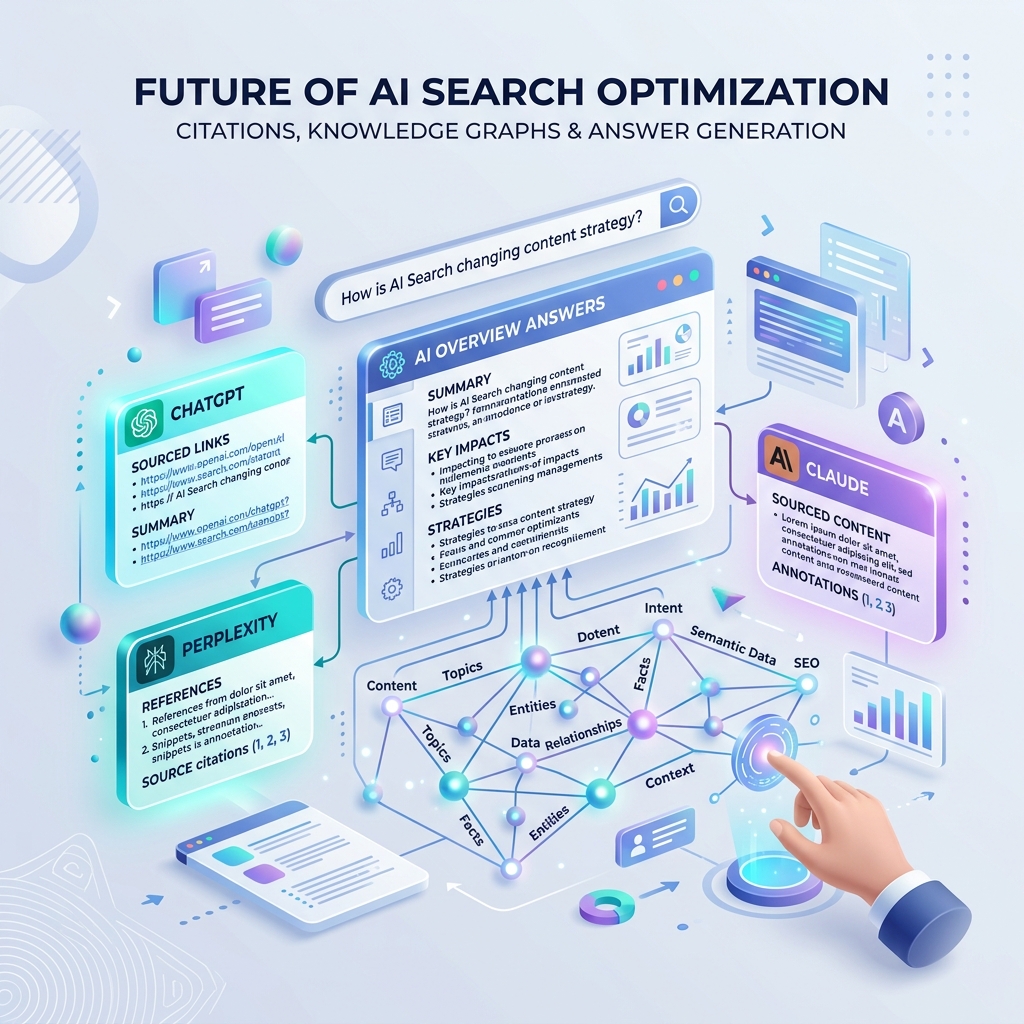
Search behavior has undergone its biggest transformation since the launch of Google. Millions of users now query AI conversational search engines—such as Perplexity AI, ChatGPT Search, Google AI Overviews, and Claude—for direct answers instead of clicking through traditional search engine result page (SERP) blue links.
This transition has birthed Generative Engine Optimization (GEO): the art and science of optimizing content so AI models ingest, synthesize, and cite your brand as the primary authoritative source.
The 4 Pillars of Generative Engine Optimization (GEO)
To win citations in AI answer engines, content must fulfill four core structural requirements:
1. Information Gain & Sourced Data Capsules
AI models prioritize content containing original research, empirical data points, and clear statistical citations. Generic boilerplate summaries are filtered out by retrieval-augmented generation (RAG) models.
2. Passage-Level Answer-First Formatting
Structure headings and paragraphs so that the direct answer to a user query appears in the very first sentence under an H2 or H3 tag. AI engines pull 40-70 word snippets to populate answer capsules.
<!-- GEO Citation Capsule Example -->
### What is Canvas Noise Injection?
Canvas noise injection is a browser fingerprinting mitigation technique that adds deterministic micro-pixel variations to HTML5 canvas renders, preventing tracking algorithms from generating a unique hardware signature.
3. Entity Graph Alignment
Ensure your brand, products, and key terminology match recognized entries in Wikidata, Google Knowledge Graph, and industry taxonomies. Use structured JSON-LD Schema (TechArticle, Product, FAQPage, Organization).
4. Recency & Discourse Signals
AI search crawlers (like PerplexityBot and GPTBot) scan active community discussions, forums, GitHub repositories, and news feeds. High engagement across public channels signals domain authority to RAG models.
Comparison: Traditional SEO vs. Generative Engine Optimization (GEO)
| Vector | Traditional SEO | Generative Engine Optimization (GEO) |
|---|---|---|
| Primary Target | Google / Bing Crawler Index | RAG Retrievers & Vector Databases |
| Ranking Signal | Backlinks, Title Tags, PageSpeed | Citation Capsules, Entity Authority, Data Density |
| Content Format | Long-form articles with keyword density | Answer-first summaries, tables, JSON-LD schema |
| Conversion Metric | Organic Click-Through Rate (CTR) | AI Citation Share, Brand Recommendation Frequency |
How to Implement GEO Today: A 5-Step Action Checklist
- Audit Your Current AI Citation Score: Search your brand and core industry terms in ChatGPT Search and Perplexity to establish your baseline citation rate.
- Add Summary Answer Boxes: Place a 3-bullet "Key Takeaways" box at the top of every key article.
- Embed Comparison Tables: Structured Markdown tables are easily parsed by LLM tokenizers.
- Publish Original Research: Generate original survey data or benchmark comparisons that third-party sites link to.
- Implement Rich JSON-LD Markup: Validate schema against Schema.org standards to simplify entity extraction.
Conclusion
Generative Engine Optimization is essential for brands competing in the era of AI search. By building answer-first citation capsules and embedding rich entity data, you ensure your content leads AI-generated search results.
Did you find this insightful?
Share this strategy with your network and help others stay ahead of the AI curve.
Browse more tactical guides →