Your content is optimized. Your schema is clean. The answers are bulleted and quotable. And AI engines still cite your competitor with half your effort.
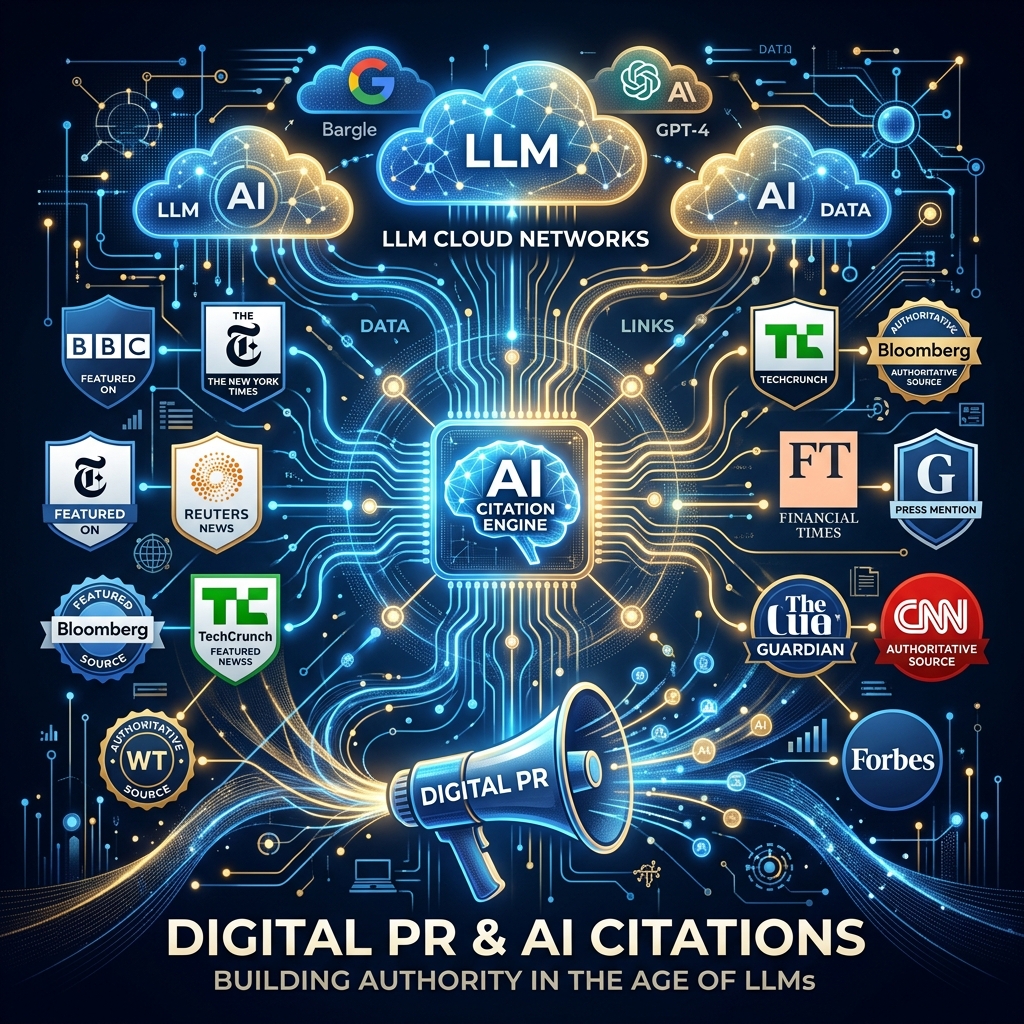
The missing layer is rarely on-page. It is earned off-page: the web of mentions, links, and placements that tells a language model your brand is a source of truth. Traditional search engines have backlinks; AI engines have a trusted-source graph built from what credible places on the web say about you. Digital PR is the discipline that feeds that graph.
This guide explains why AI engines treat off-site mentions as a primary trust signal, how earned media placements translate into AI citations, and the process for running digital PR that actually moves your brand into LLM answers.
How AI Engines Decide What to Trust
Language models do not rank pages against each other the way a search engine does. When an answer needs a source, the model draws on what it associates with credibility: the publishers, domains, and entities that appear again and again in high-quality contexts. This creates a short list of trusted references per topic, and models cite from that list disproportionately.
Understanding that mechanism changes the strategy. You do not earn an AI citation by out-optimizing the page on the other side. You earn it by becoming the brand that trusted publications mention when the topic comes up. Once you are associated in that way, models learn to attribute the topic to you.
Three signals decide whether you enter the trusted list:
The authority of the mentioning source. A placement in a major industry publication or recognized directory transfers far more trust than a hundred low-quality mentions. The weight of the mentioner matters more than the count.
The relevance of the context. A mention in an article about marketing tools signals one kind of authority; a mention in an article about eating disorders would pollute the graph. Models learn entity relationships from context, so every placement must be adjacent to the topics you want to own.
Consistency over time. A single famous mention is a spike. Models, like people, develop durable trust from repeated, consistent appearances. The brands that win AI citations are the ones that show up predictably in coverage related to their space.
Why ROI Looks Different Here
Digital PR has traditionally been justified by referral traffic, domain authority, and backlinks. AI citations change the calculation because they break the click-through that justified the spend.
An earned placement can have three compounding effects that never show up in your analytics:
Direct citation. Your brand is named in an AI answer because the model absorbed a piece of coverage. The user gets the answer without clicking, and you get visibility with no session.
Graph reinforcement. Each quality placement teaches the model that your brand sits in a particular category. It strengthens every future answer, even ones that never reference the specific placement.
Authoritative source recognition. Some placement types, like expert quotes, contributor pieces, and data citations, get treated by models as primary sources. Being the one quoted, not just mentioned, is the strongest position in the graph.
This makes the modern digital PR report read differently. Reach still matters, but equal weight goes to citations and to whether the placement's context matches the topic surface you want to win in AI answers.
The Modern Link Earning Process
Step 1: Decide the entity you want to own. Pick the few topics where you want AI engines to name you as an authority. Every placement targets that short list. Trying to be authoritative about everything guarantees being authoritative about nothing.
Step 2: Create quotable assets. Journalists and models both need something to lift. Publish original data, surveys, benchmarks, and expert commentary formatted so the key statistic or takeaway can be quoted in one line. A one-stat asset is infinitely more citable than a ten-page whitepaper.
Step 3: Run journalist-honest outreach. Pitch your data and expertise to publications, newsletters, and podcasts in your niche with an angle, not an ad. The goal is a placement where you are mentioned as the source, which is the format LLMs treat as authoritative.
Step 4: Layer expertise-focused placements. Industry conference talks, expert roundups, contributed articles, and authoritative podcast appearances fill the relevance bucket. They keep you consistently near the topic surface without chasing news cycles.
Step 5: Monitor, cite, and repeat. When you earn a placement, link to it from your own content and make sure the asset page is structured for extraction. Then return to step one with the feedback. Consistency is the compounding input, so the process must run continuously, not at campaign time.
Data-Driven Insights
1. Authority is concentrated. Across many categories, AI answers repeatedly cite a small set of domains that have built a media-association moat. The gap between the top cited sources and the long tail is enormous, and it is closed by consistent earned authority, not occasional bursts.
2. Consistency predicts citation share. Brands that appear in relevant coverage on a steady cadence are cited by AI engines far more often than brands that earn coverage in disconnected spikes, even when the spike is larger.
3. The entity graph rewards clarity. Businesses that articulate a clear, consistent identity, the same category, the same positioning, the same terminology across every placement, get associated with that identity faster. Confused positioning produces confused attribution.
FAQ
What is digital PR in the context of AI search?
Digital PR for AI search is the practice of earning mentions, links, and placements in credible external publications so that AI engines like ChatGPT, Perplexity, and Gemini treat your brand as an authoritative source and cite it in generated answers. It is the modern successor to traditional link building, focused on the trust signals language models actually use.
Why do AI engines cite brands that appear in the press?
Language models build credibility associations from the web of high-quality contexts in which a brand appears. When trusted publications, newsletters, and industry sources mention a brand consistently and in relevant contexts, the model learns to treat that brand as a source of truth and name it in answers.
Does digital PR for AI citations help my Google rankings too?
Yes, to a degree. Earned mentions and links remain valuable for traditional SEO alongside their AI effect. The strategies overlap: authority gained through quality placements helps both a search engine's assessment of your site and a language model's association of your brand with a topic.
How is ROI measured for AI-focused digital PR?
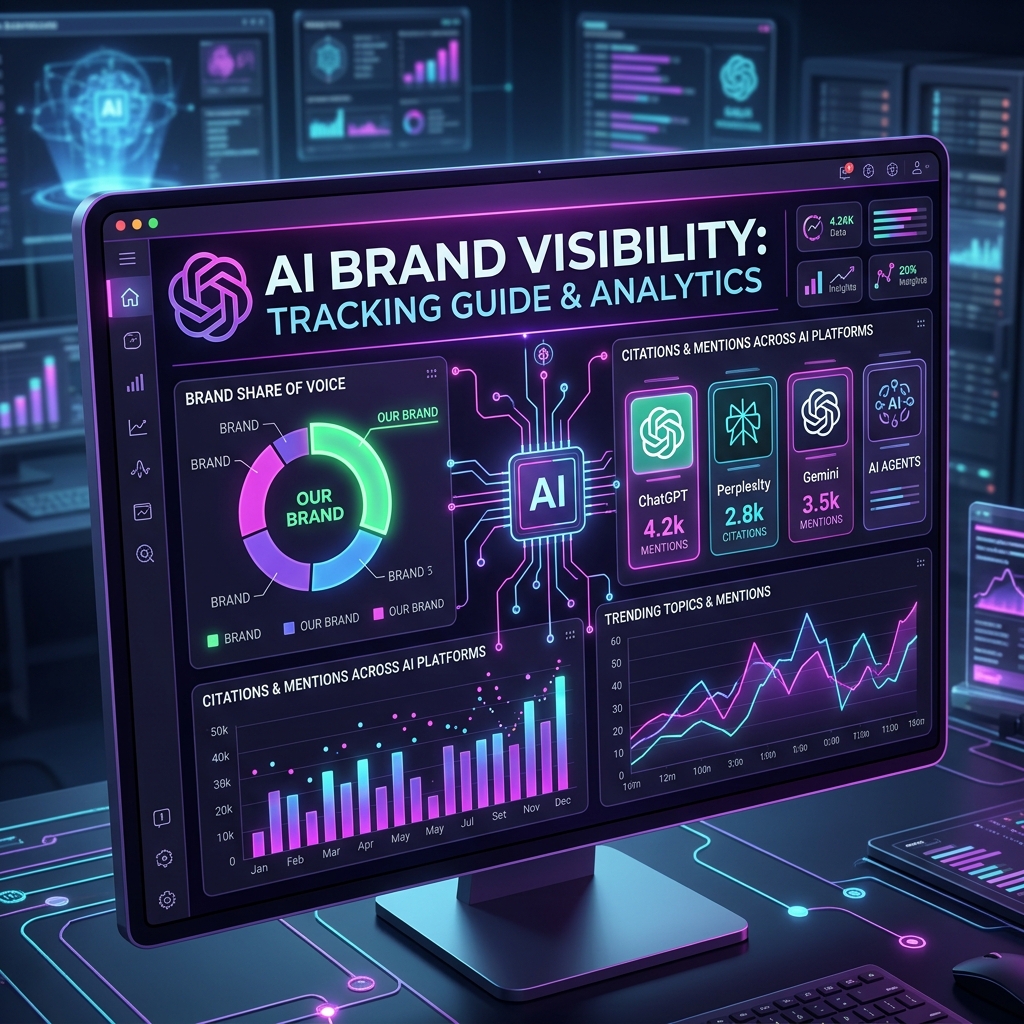
You measure citation share: how often your brand is named in AI answers for your target queries over time, which competitors are cited more, and whether new placements move your mention rate. These metrics sit alongside traditional reach and referral numbers to form a complete picture.
What type of content is easiest for AI engines to cite?
Original data, benchmarks, and expert takeaways that can be quoted in a single sentence or paragraph. Language models lift concise, self-contained claims from contextual authority. A bolded one-line statistic from a survey is dramatically more citable than a lengthy analytical piece with no extractable claim.
Conclusion
AI engines do not know your brand; they know what the web's most credible voices say about it. On-page GEO is necessary, but it is never sufficient on its own. The brands that own AI citations are the ones that consistently earn relevant, authoritative mentions, formatted so that the claim can be lifted, adjacent to the topics they want to win. Build the assets, earn the placements, stay consistent, and measure citation share. That graph is the moat, and it compounds.
Did you find this insightful?
Share this strategy with your network and help others stay ahead of the AI curve.
Browse more tactical guides →